
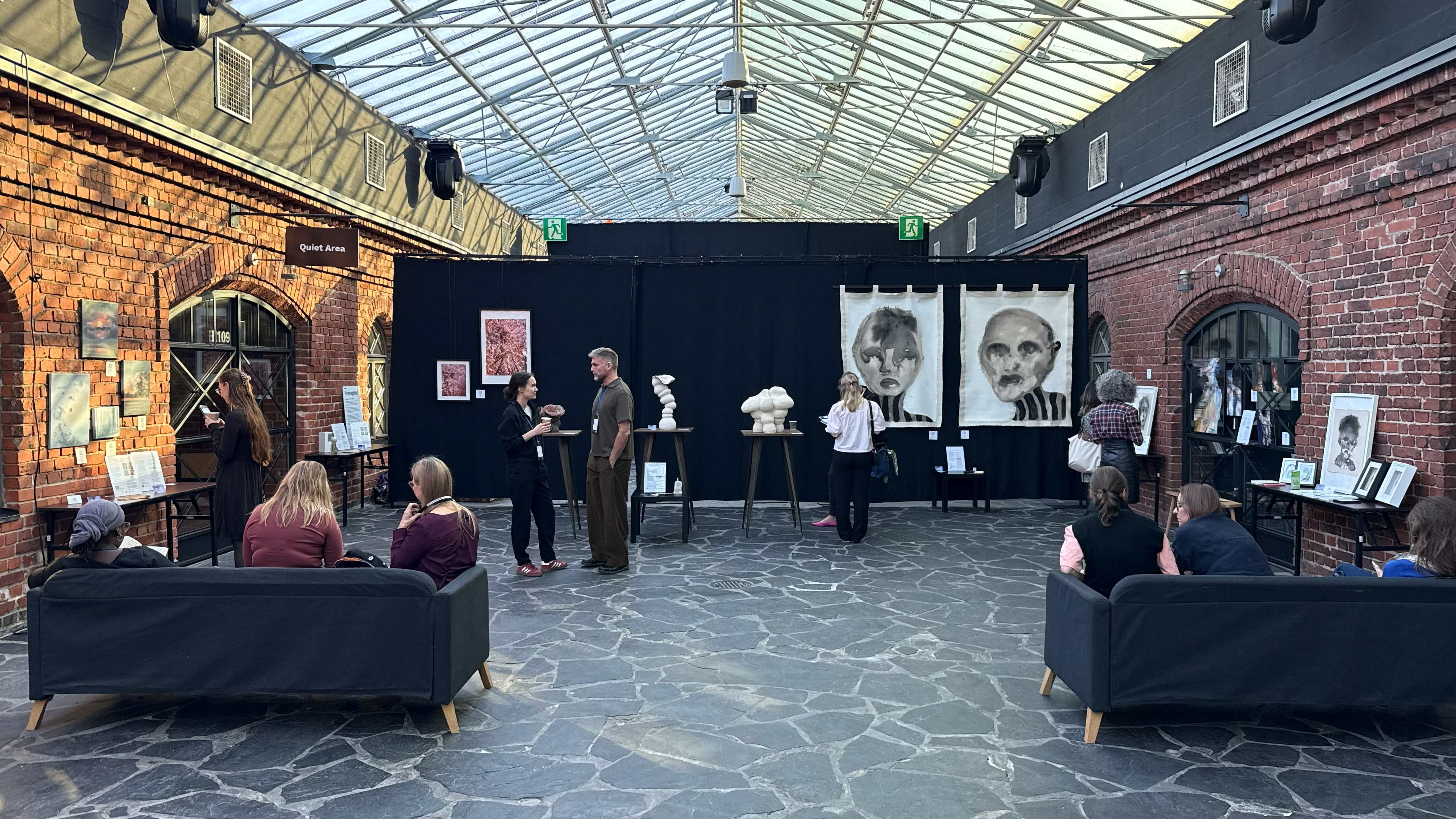
Partners have filled Wanha Satama in Helsinki on 22 October long before the first attendees set their foot for Women in Tech Forum 2026, an anticipated event for women professionals and students in tech. The WiT Finland flagship event was held under the theme "Tech Horizons: Impacting our Future", students, engineers, founders and executives spent the day on keynotes, panels, deep dives and partner stands. Judging by what attendees shared afterwards, thoughts about artificial intelligence ran through almost every session.
The focus was less about adopting AI faster and more about adopting it well. Across keynotes and panels, speakers came back to the same idea: AI’s impact depends on human judgment, leadership, creativity and who gets to take part. Accenture’s Dr. Neeta Nagar put it most simply, and it became the line attendees quoted most: the goal isn’t to keep up with AI, it’s to be ready for continuous change. AI was described as a leadership and change challenge rather than a productivity tool, and governance, trust and solid foundations came up as often as the technology itself.
The main stage opened with Dr. Anne Stenros, architect and founding member of Women in Tech Finland, who took the audience to 2050 through the story of "Ann(i)e", a glimpse of everyday life in an ageing society. Emilia Stuart of IQM Quantum Computers followed with a plain-language look at quantum computing and the cost of overpromising in tech.
Marianna Saarinen, Country Manager of AWS Finland, spoke on leading in the age of agentic AI. As AI moves from answering questions to taking actions, leaders will need to orchestrate teams of people and AI agents together, and several attendees left asking whether the way we lead is changing as fast as the technology. Shay Strong of ICEYE then gave the day one of its most-discussed ideas: "impact radius", a way to match the review and care a decision gets to how far its consequences travel, rather than to how quickly AI made it possible to build
The morning panel, "The Next Tech Frontier: What Will Actually Matter?", was moderated by Josefiina Kotilainen of mercs, with Ambassador Jarmo Sareva, Mona Dash of Infosys and AI thought leader Cristina Andersson. The panel agreed that regulation, trust, security and business models, not technical capability alone, decide which innovations take off. Dash pointed to data security and governance as the unglamorous foundations that decide whether AI works at all. Sareva argued that as AI makes technology more accessible, human creativity, judgment and the ability to turn innovation into global business will matter more, and that Finland should become as good at creativity and commercialisation as it already is at engineering.
After lunch, Women in Tech Finland CEO Katja Toropainen shared the community's news and UNICEF Finland showed a short film on girls and future skills. Dr. Neeta Nagar of Accenture asked whether keeping up with AI is the wrong goal altogether. Her answer, repeated in many posts afterwards, was that the aim is not to keep up but to be ready for continuous change, and that readiness starts with the right foundations. Vivicta CEO Satu Kiiskinen shared her own non-linear route into tech leadership, with curiosity and continuous learning as its common thread. Founders Taina Pereenniemi of PremiumOps.ai and Nea Harjanne of Kreia pitched in a spotlight hosted by Joey Bayer of Epicenter, who also moderated the closing panel on FOBO and technostress with Elina Ojala of Knowit and Mari Laukkanen of Accenture.
Alongside the main stage, the partner-led deep dives were fully booked. Knowit's Eeva Andrejeff and Sanna Tallberg ran a workshop on challenging the industry's assumptions. Tieto's Petra Tarkkala and Vilja Grotenfelt of Flow Festival showed how inclusive design shapes an accessible festival experience at scale. Samad Masood of Infosys presented research on how unevenly AI support reaches different levels of an organisation, TEK's Susanna Bairoh and Owain Hopeaketo covered pay equality and working rights, and Femcode Collective's Viivi Marttinen taught beginners to vibe code.
Between sessions, the Forum also made room for the senses. Smell the Art designed a unique art and scent experience lounge, an attempt to balance the digital side of life with the human and artistic one: real craft, real materials and the senses. Artworks were paired with niche fragrances, creating a multisensory pause in the middle of a busy, tech-heavy day. The same hands-on spirit showed up across the venue, where visitors made beaded keychains and flower bracelets at the stands.
The Forum was made possible by Platinum Partner Accenture; Gold Partners Infosys, Knowit and Vivicta; main partner Google; Bronze Partners ABB, AWS, Eficode, Next Games, SSAB, TEK and Tieto; community partners Epicenter, Femcode Collective, Hive Helsinki, Junction, Root Expo, UNICEF Finland and Women in Tech Sweden; and experience partners Pure Waste and Smell the Art. The after party at Radisson RED was run by Tribe Networks with support from Lovable and Stripe.
For many, the conversations in between mattered as much as the keynotes on stage. Partner stands were busy all day, volunteers in "enter(); stay(); lead();" T-shirts kept the day moving, and attendees wrote about women supporting women, about how different backgrounds make for better questions, and about a programme curated carefully enough that almost every session left them with something. The industry still needs more women in tech, and on this day, about a thousand of them were in one venue sharing their views and journeys, and working out what comes next.
KSENIA AVETISOVA