
TALLINN / HELSINKI — Finest Bay Area Development (FEBAY) has taken a decisive step forward in the realization of the ambitious Helsinki–Tallinn railway connection by submitting a new application to the Estonian government on Monday, November 2, 2026. The filing seeks to initiate a National Designated Spatial Plan (NDSP) alongside an associated Strategic Environmental Assessment (SEA). This submission represents a major strategic milestone for the multi-billion-euro project following years of administrative delays, signaling a renewed momentum for cross-border infrastructure in the Baltic region.
The resubmission comes after a prolonged period of procedural and legal hurdles in Estonia, where FEBAY's previous attempts to advance the project were stalled by regulatory ambiguities regarding environmental assessments and spatial planning. A pivotal 2024 Estonian government study highlighted these systemic bottlenecks, revealing that environmental assessment procedures taking roughly one year in neighboring Finland or Sweden could stretch to at least six years under Estonia's legacy framework. In response, Tallinn has enacted legislative reforms aimed at streamlining administrative timelines without compromising environmental standards or public participation.
By establishing a more predictable planning environment, Estonia’s legal updates provide a synchronized foundation for the project’s environmental review across both sides of the Gulf of Finland. The joint Finnish–Estonian Ad Hoc Working Group has consistently emphasized the necessity of examining the tunnel’s transboundary environmental impacts through harmonized national procedures. With Finland’s environmental impact assessment already underway, the initiation of the Estonian NDSP will allow regulators and experts from both nations to align their studies, supporting coherent, evidence-based decision-making.
Project leadership expressed strong optimism regarding the updated regulatory landscape and the constructive dialogue with Estonian authorities. “We have had to wait years to take this step, and we are pleased to be moving forward,” noted FEBAY co-founder Peter Vesterbacka, praising Estonia’s commitment to transparent and efficient procedures. Fellow co-founder Kustaa Valtonen echoed this sentiment, stressing that clear responsibilities and workable timetables are essential prerequisites for evaluating technical, economic, and environmental questions on an infrastructure endeavor of this magnitude.
FEBAY’s fresh application is bolstered by key political and legal engagements, including constructive dialogue with Estonian Minister of Economic Affairs and Industry Liina Vahtras and Minister of Foreign Affairs Margus Tsahkna. Law firm Sorainen, led by partner Paul Künnap, served as legal counsel throughout the regulatory navigation and application drafting process. These high-level preparations reflect a coordinated effort to align private-sector initiative with national strategic priorities and international agreements, such as the 2021 Memorandum of Understanding signed between Finland and Estonia.
On the financial front, the planning milestone closely follows FEBAY’s strategic partnership with Finna to launch the Finna Finest Infrastructure Fund. Designed to channel European private capital into the tunnel project, the initiative targets single family offices seeking long-term, stable investments. Citing 2024 Deloitte Private research—which identified over 2,000 European single family offices within a global market managing $3.1 trillion—FEBAY aims to leverage this capital pool to build a resilient, Europe-centered financial architecture alongside potential public partners.
Designed as an undersea high-speed passenger and freight rail link, the Finest Tunnel is set to physically connect Finland with Rail Baltica, integrating the Nordic region directly into the broader European railway network. Beyond dramatically reducing travel times between Helsinki and Tallinn, the infrastructure is expected to catalyze economic growth, boost supply security, and offer a low-carbon transport alternative for regional trade.
With the spatial plan application now before the Estonian government, FEBAY stands ready to submit the comprehensive technical and environmental studies required for formal review. In addition to its flagship Baltic tunnel project, the private developer continues to advance regional transit initiatives across Northern Europe, including the Oslo–Stockholm 90-minute rail corridor, underlining its broader vision for interconnected Nordic-Baltic infrastructure.
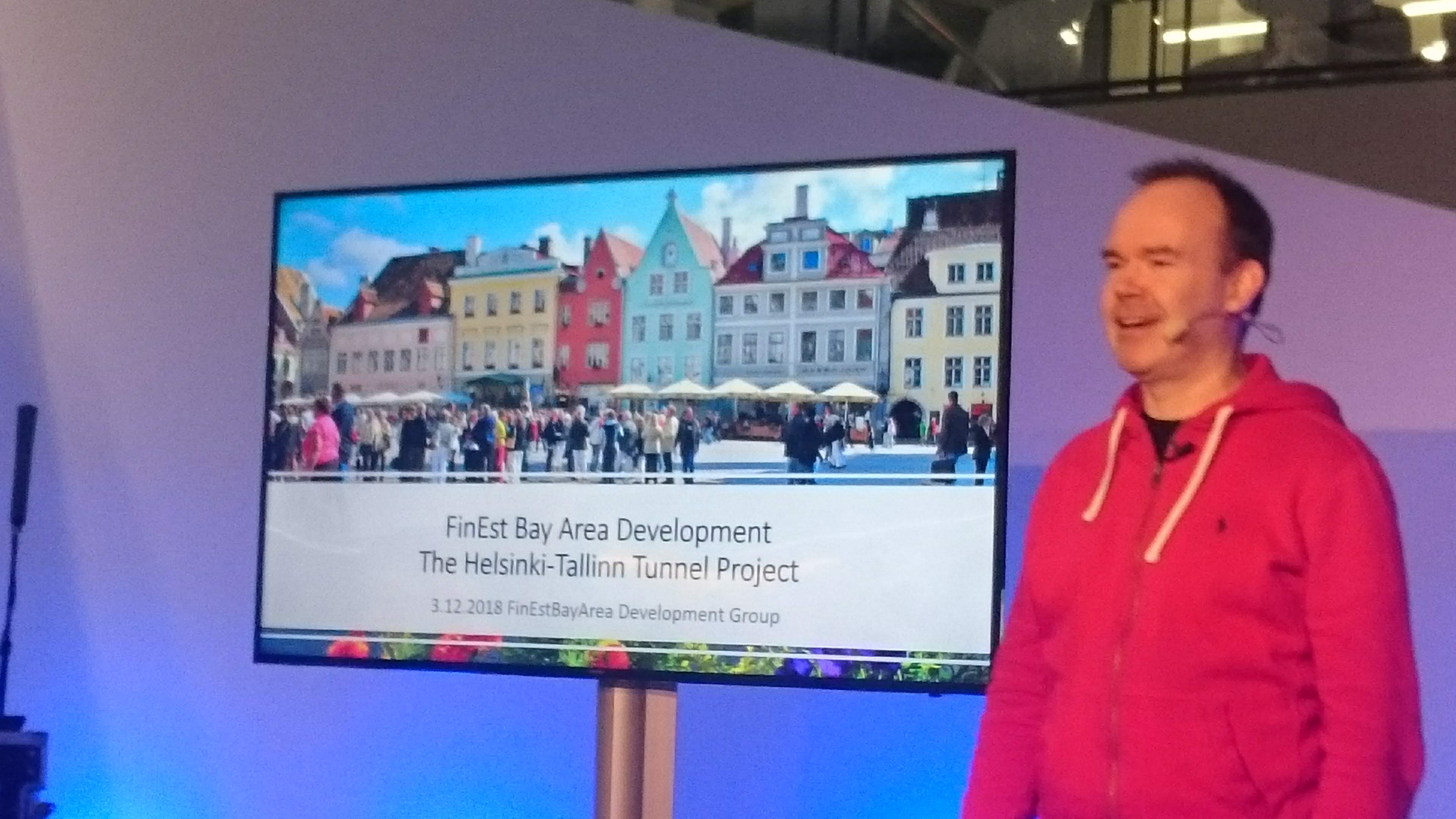
Finest Bay Area Development Oy is a privately held company that develops major infrastructure projects connecting people, businesses and markets across Northern Europe. Its flagship project, the Finest Tunnel, is a privately developed railway tunnel between Helsinki and Tallinn. FEBAY is also developing the Oslo–Stockholm 90-minute railway.
A Tunnel under the Troubled Water, the Baltic Sea
TALLINN / HELSINKI — Finest Bay Area Development (FEBAY) has taken a decisive step forward in the realization of the ambitious Helsinki–Tallinn railway connection by submitting a new application to the Estonian government on Monday, November 2, 2026. The filing seeks to initiate a National Designated Spatial Plan (NDSP) alongside an associated Strategic Environmental Assessment (SEA). This submission represents a major strategic milestone for the multi-billion-euro project following years of administrative delays, signaling a renewed momentum for cross-border infrastructure in the Baltic region.
The resubmission comes after a prolonged period of procedural and legal hurdles in Estonia, where FEBAY's previous attempts to advance the project were stalled by regulatory ambiguities regarding environmental assessments and spatial planning. A pivotal 2024 Estonian government study highlighted these systemic bottlenecks, revealing that environmental assessment procedures taking roughly one year in neighboring Finland or Sweden could stretch to at least six years under Estonia's legacy framework. In response, Tallinn has enacted legislative reforms aimed at streamlining administrative timelines without compromising environmental standards or public participation.
By establishing a more predictable planning environment, Estonia’s legal updates provide a synchronized foundation for the project’s environmental review across both sides of the Gulf of Finland. The joint Finnish–Estonian Ad Hoc Working Group has consistently emphasized the necessity of examining the tunnel’s transboundary environmental impacts through harmonized national procedures. With Finland’s environmental impact assessment already underway, the initiation of the Estonian NDSP will allow regulators and experts from both nations to align their studies, supporting coherent, evidence-based decision-making.
Project leadership expressed strong optimism regarding the updated regulatory landscape and the constructive dialogue with Estonian authorities. “We have had to wait years to take this step, and we are pleased to be moving forward,” noted FEBAY co-founder Peter Vesterbacka, praising Estonia’s commitment to transparent and efficient procedures. Fellow co-founder Kustaa Valtonen echoed this sentiment, stressing that clear responsibilities and workable timetables are essential prerequisites for evaluating technical, economic, and environmental questions on an infrastructure endeavor of this magnitude.
FEBAY’s fresh application is bolstered by key political and legal engagements, including constructive dialogue with Estonian Minister of Economic Affairs and Industry Liina Vahtras and Minister of Foreign Affairs Margus Tsahkna. Law firm Sorainen, led by partner Paul Künnap, served as legal counsel throughout the regulatory navigation and application drafting process. These high-level preparations reflect a coordinated effort to align private-sector initiative with national strategic priorities and international agreements, such as the 2021 Memorandum of Understanding signed between Finland and Estonia.
On the financial front, the planning milestone closely follows FEBAY’s strategic partnership with Finna to launch the Finna Finest Infrastructure Fund. Designed to channel European private capital into the tunnel project, the initiative targets single family offices seeking long-term, stable investments. Citing 2024 Deloitte Private research—which identified over 2,000 European single family offices within a global market managing $3.1 trillion—FEBAY aims to leverage this capital pool to build a resilient, Europe-centered financial architecture alongside potential public partners.
Designed as an undersea high-speed passenger and freight rail link, the Finest Tunnel is set to physically connect Finland with Rail Baltica, integrating the Nordic region directly into the broader European railway network. Beyond dramatically reducing travel times between Helsinki and Tallinn, the infrastructure is expected to catalyze economic growth, boost supply security, and offer a low-carbon transport alternative for regional trade.
With the spatial plan application now before the Estonian government, FEBAY stands ready to submit the comprehensive technical and environmental studies required for formal review. In addition to its flagship Baltic tunnel project, the private developer continues to advance regional transit initiatives across Northern Europe, including the Oslo–Stockholm 90-minute rail corridor, underlining its broader vision for interconnected Nordic-Baltic infrastructure.
* * * *
Finest Bay Area Development Oy is a privately held company that develops major infrastructure projects connecting people, businesses and markets across Northern Europe. Its flagship project, the Finest Tunnel, is a privately developed railway tunnel between Helsinki and Tallinn. FEBAY is also developing the Oslo–Stockholm 90-minute railway.